
El café entra en la jornada
Un modelo farmacocinético simple conecta la ingesta de café con concentraciones de cafeína relevantes para el receptor.
El café forma parte de la vida científica: noches largas, entregas de artículos, corridas de análisis y el último empuje antes de un resultado.
Esta nota usa Vicena Compute para convertir ese ritual en un flujo inspeccionable de química computacional: ingesta de cafeína, unión al receptor, competencia con adenosina y contexto estructural.
No es solo una explicación generada. La demo incluye salidas de docking Rowan, archivos receptor-ligando, gráficos, un visor 3D de cafeína A2A y un paquete de cuaderno autocontenido que puede abrirse, inspeccionarse y reutilizarse.
Un modelo farmacocinético simple conecta la ingesta de café con concentraciones de cafeína relevantes para el receptor.
Las salidas de docking Rowan muestran cafeína ocupando el bolsillo del receptor A2A usado por la adenosina endógena.
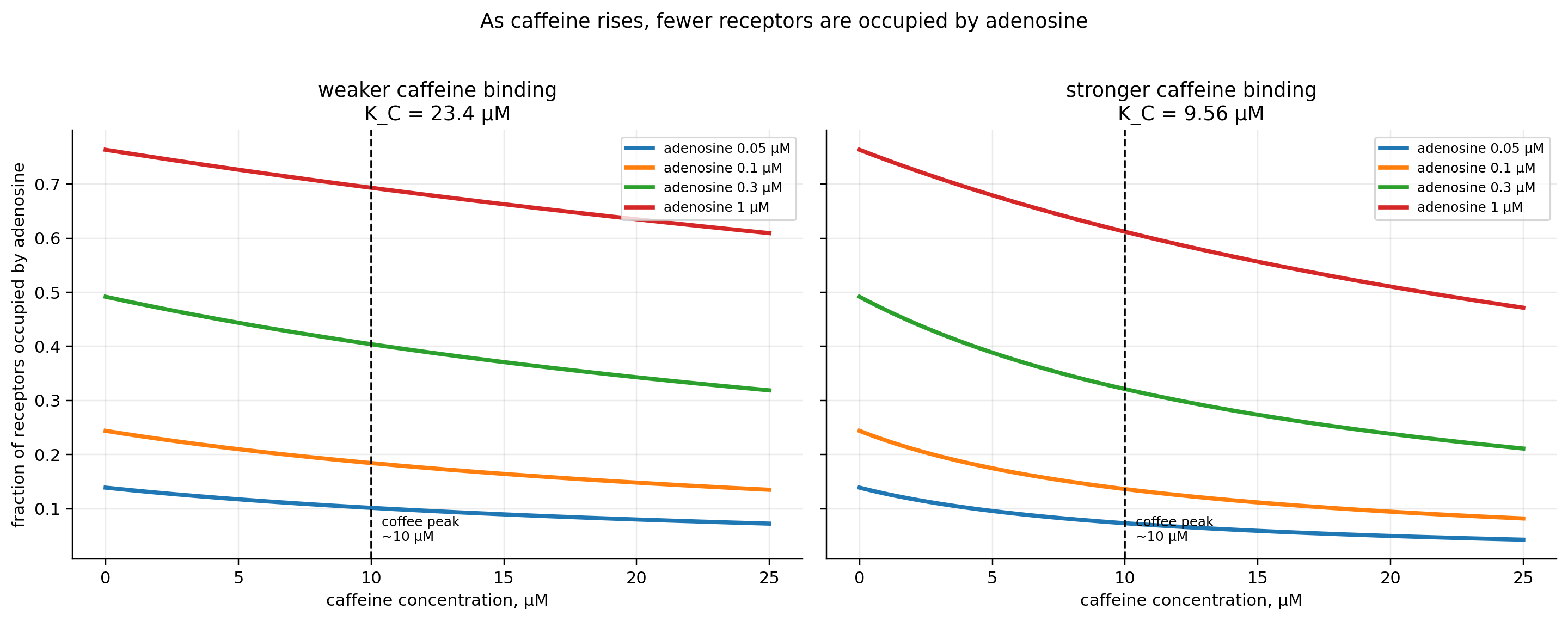
Un modelo de ocupación competitiva explica cómo la cafeína puede reducir la fracción del receptor unido a adenosina.
Qué se ejecutó realmente
This application note is built from a self-contained Vicena Compute package, not only from a written answer.
The package includes Rowan docking results for caffeine and adenosine, docked A2A receptor-ligand complex files, receptor structure comparisons, pocket contact analysis, pharmacokinetic modeling, competitive receptor occupancy modeling, generated figures, a 3D molecular viewer, and the original notebook package.
The application note tells the scientific story. The package keeps the computational evidence available for inspection.
La historia científica
The notebook follows a practical chain of reasoning. A cup of coffee produces caffeine exposure. A pharmacokinetic model estimates that caffeine can reach micromolar concentrations relevant to receptor occupancy. Docking outputs then show caffeine occupying the A2A adenosine receptor pocket.
Contact analysis makes the pose-level result inspectable, and a competitive occupancy model explains how caffeine can shift receptor occupancy away from adenosine.
That does not mean the notebook simulates subjective alertness directly. It creates molecular and quantitative evidence around a known pharmacology mechanism: caffeine reduces adenosine receptor signaling by competing with adenosine at receptor sites.
Salidas computadas
The result is not just a final paragraph. It is a notebook-based workflow with plots, docking summaries, receptor structure comparison, contact analysis, a 3D viewer, and downloadable files.
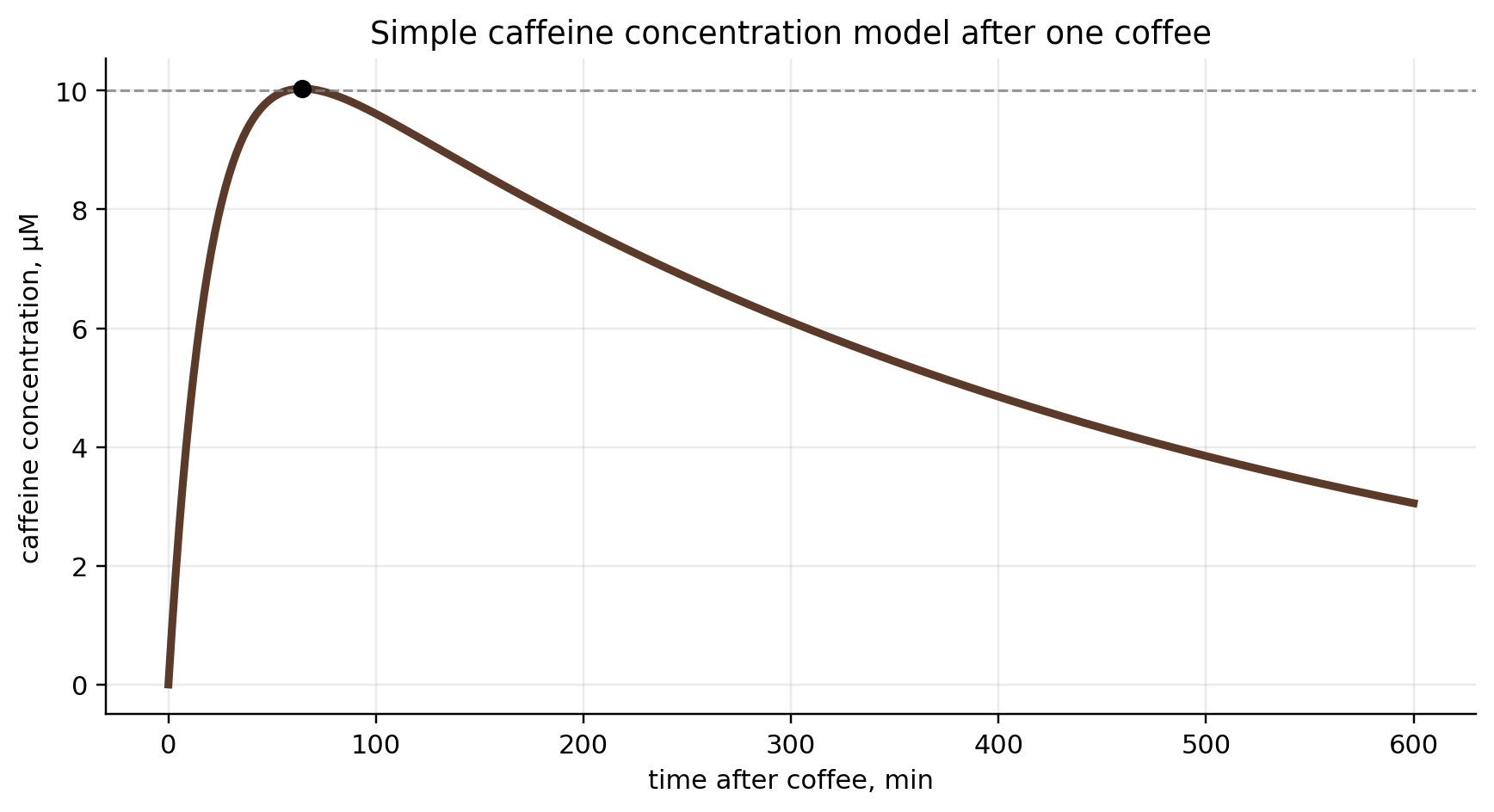
A lightweight PK model shows why coffee can reach micromolar caffeine concentrations relevant to receptor occupancy.
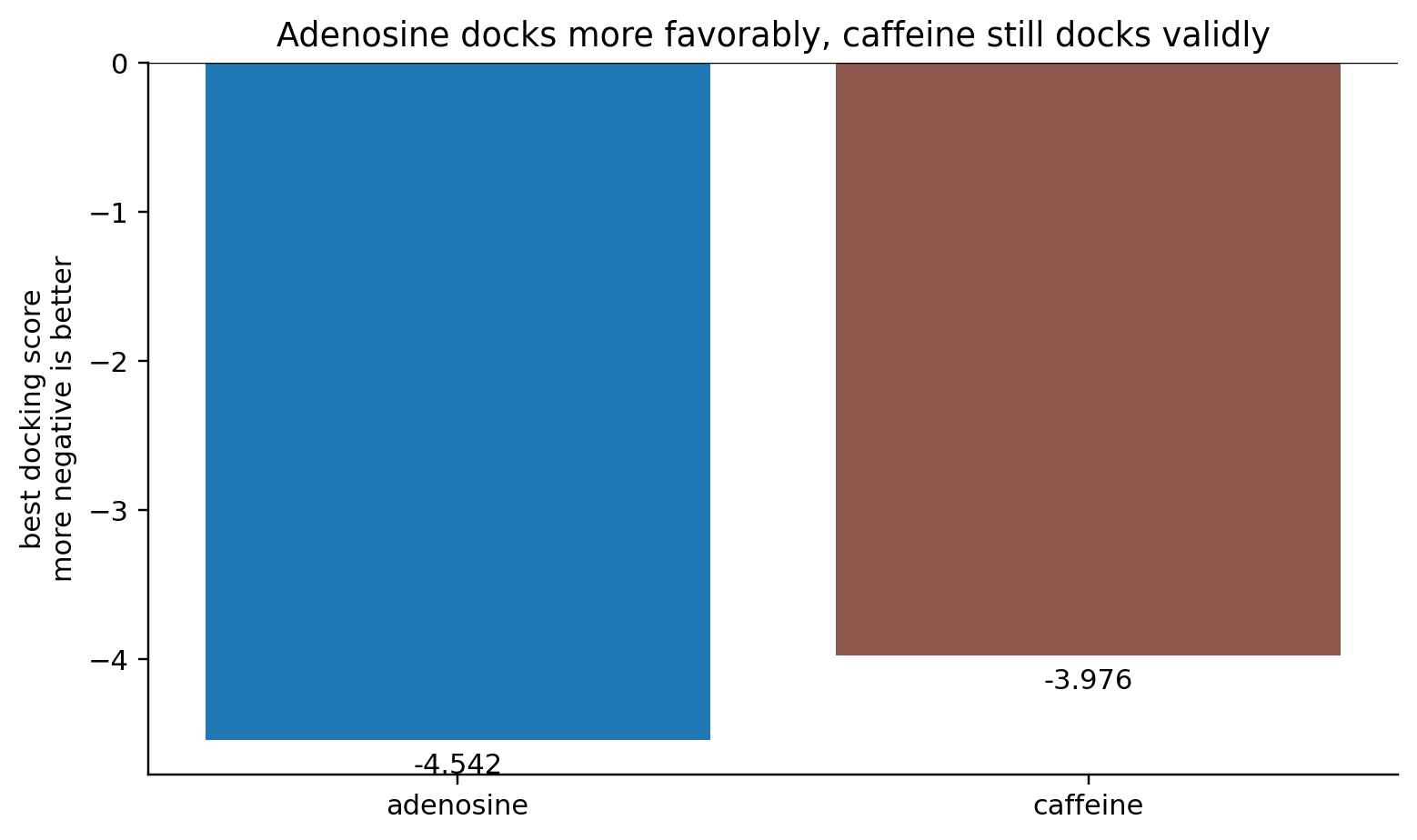
Rowan docking outputs compare caffeine and adenosine in an A2A receptor pocket setup.
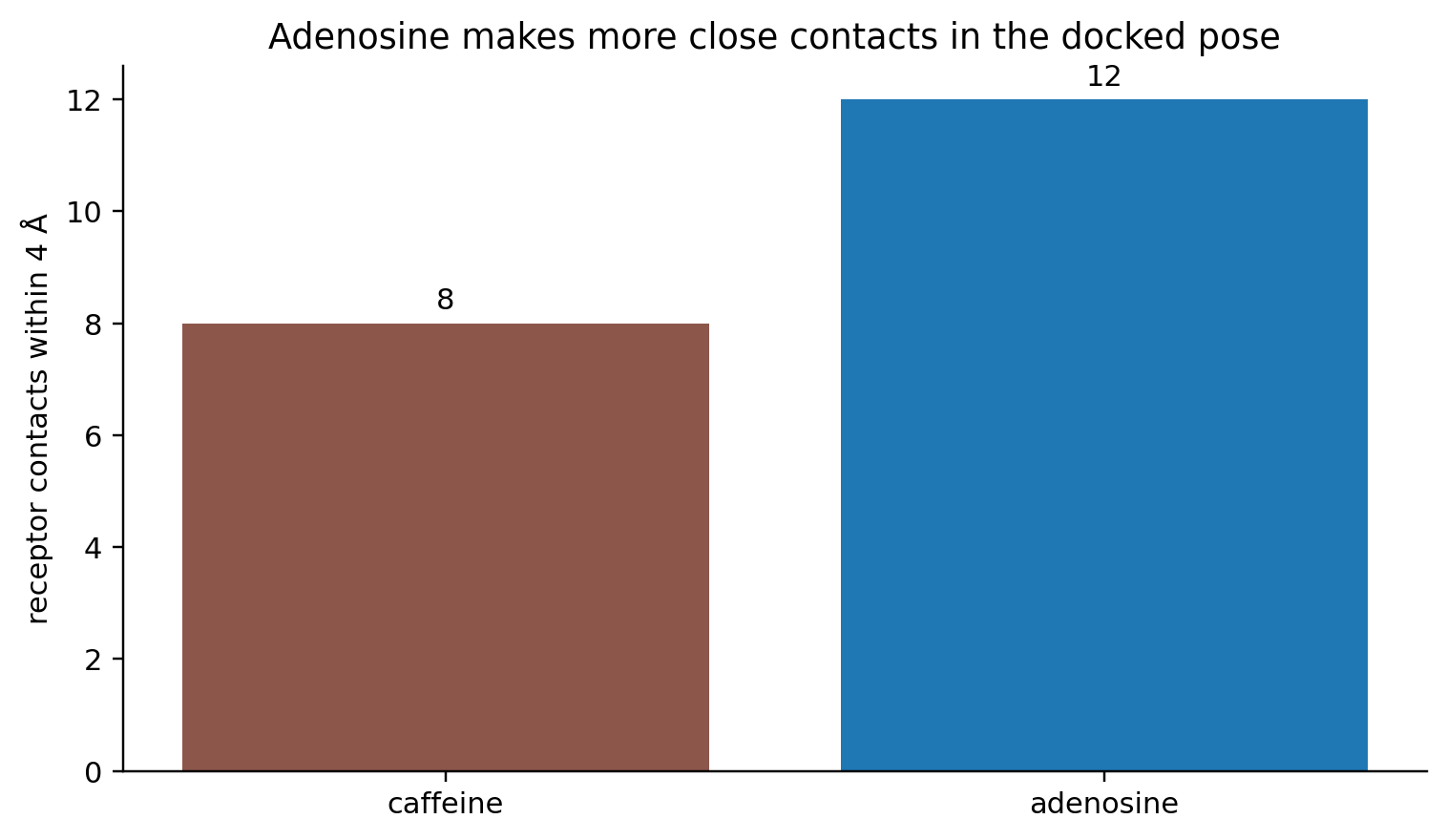
Contact-count summaries turn receptor-ligand pose outputs into inspectable structural evidence.
A receptor occupancy model links concentration and affinity assumptions to reduced adenosine-bound receptor fraction.
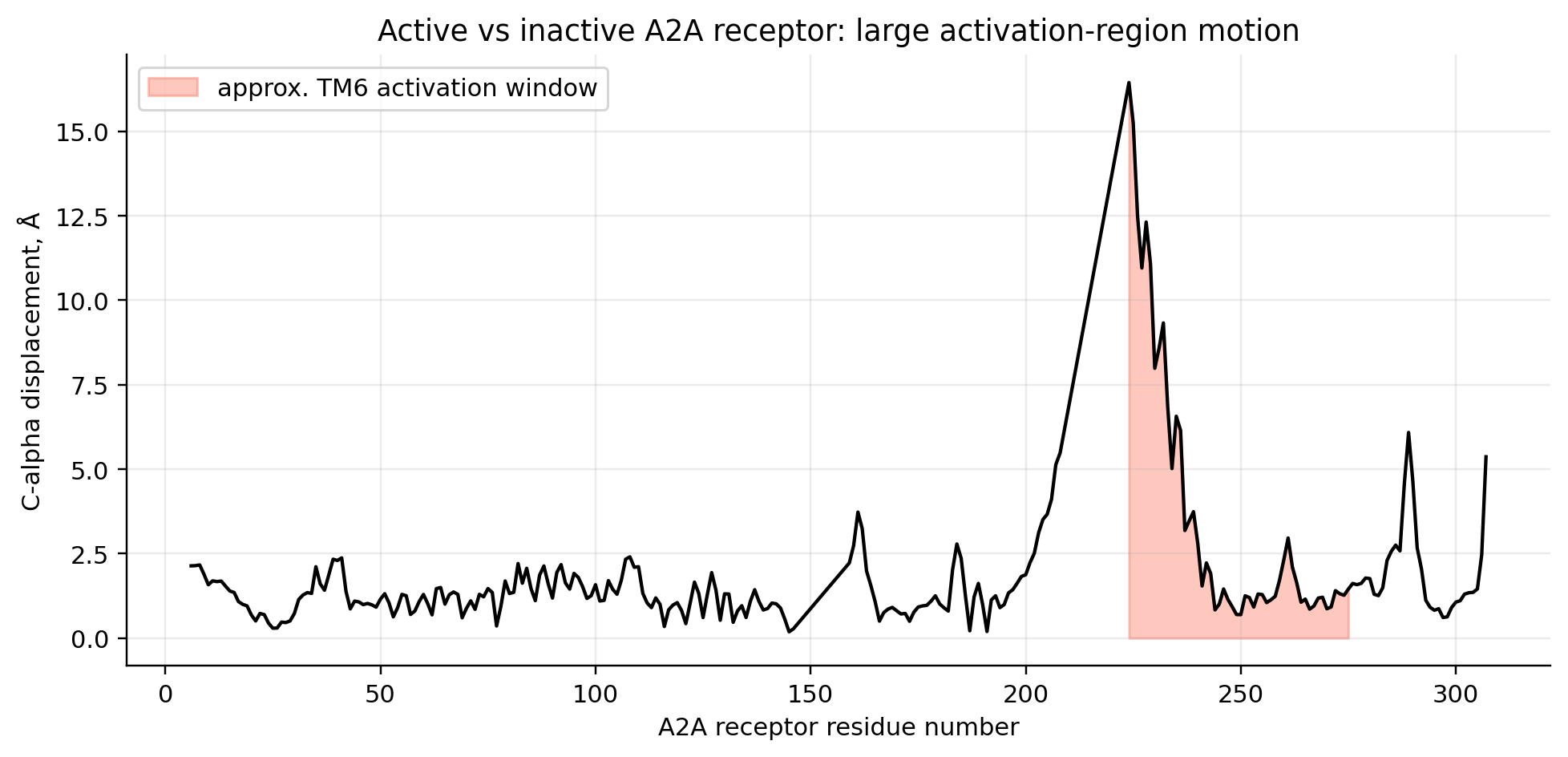
Active and inactive A2A structures show why binding alone is not the same thing as receptor activation.
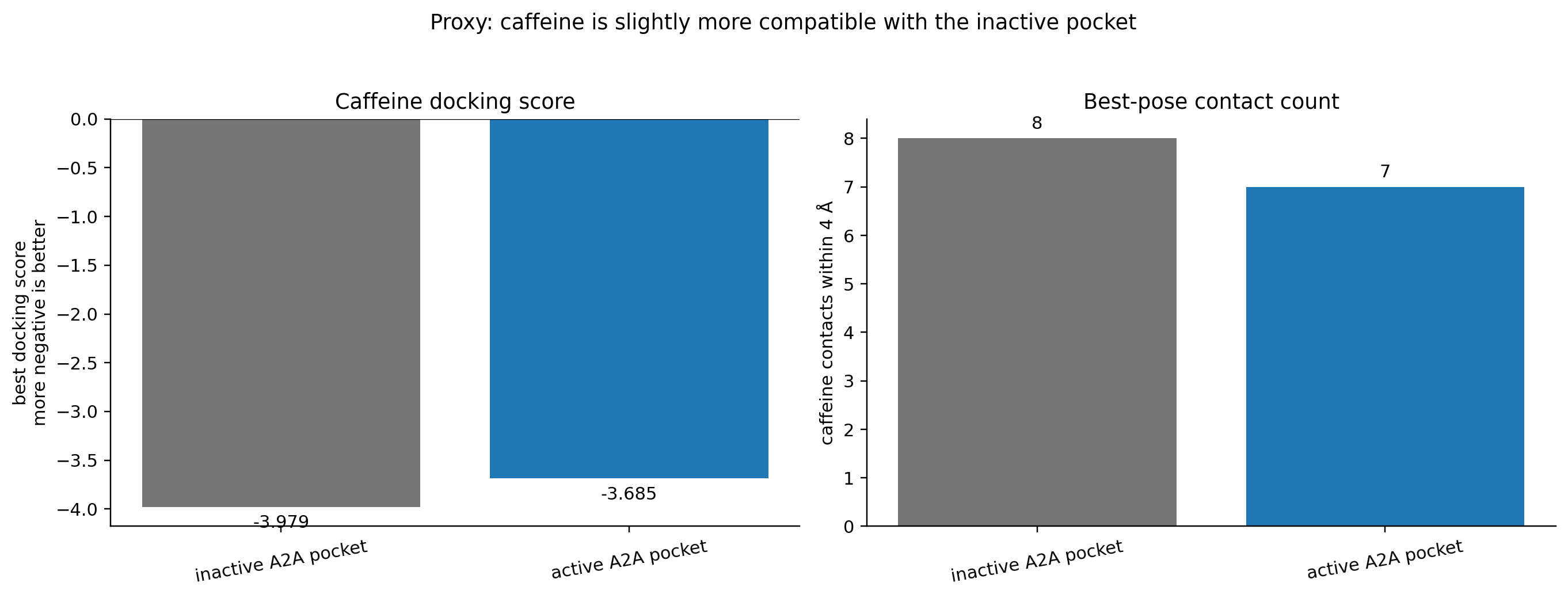
A bounded docking proxy checks whether caffeine is more compatible with inactive or active pocket geometry.
Cómo Vicena gestionó el trabajo
The value is not that a scientist learns a new docking package. The value is that the scientist starts from the biological question, and Vicena helps organize the compute, notebook, plots, files, visualizations, and limitations around it.
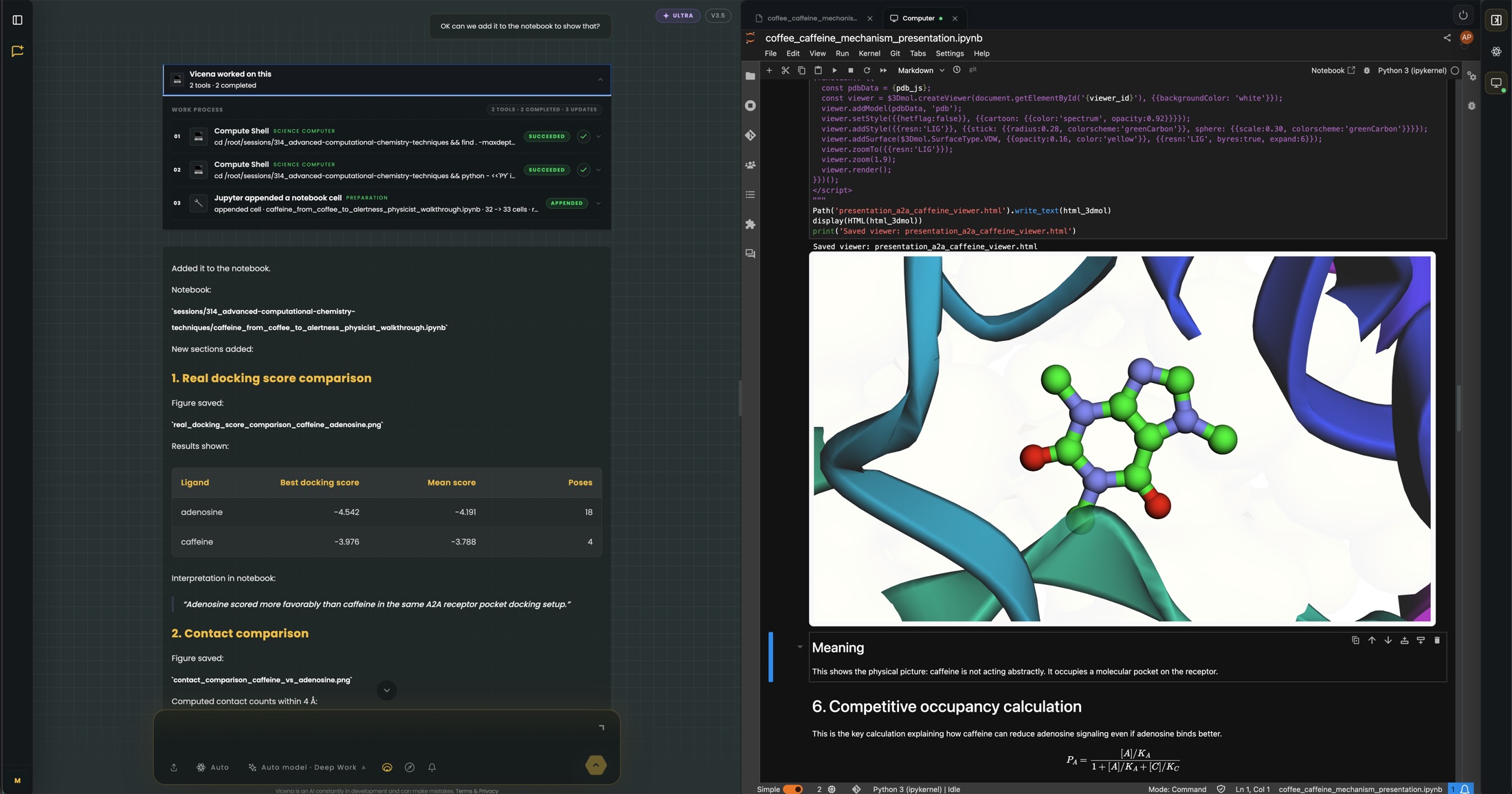
What does coffee do at the molecular level that could help a tired scientist stay alert?
Combine caffeine chemistry, a pharmacokinetic model, Rowan docking results, receptor structures, contact analysis, occupancy modeling, and plots.
Review docking poses, scores, contacts, receptor occupancy, and active/inactive structural movement.
Separate what the computation supports from what comes from established receptor pharmacology.
Límite de interpretación
The computations support a specific mechanistic chain: caffeine can reach receptor-relevant concentration, occupy the A2A adenosine receptor pocket, and reduce the adenosine-bound receptor fraction under a competitive occupancy model.
The notebook does not compute true binding free energies, ligand efficacy, downstream neuronal signaling, or subjective sleepiness. The antagonist interpretation is grounded in established receptor pharmacology, while the notebook provides inspectable computational evidence around that mechanism.
This boundary is part of the value. Vicena does not only produce an answer; it helps make the reasoning, evidence, and limitations visible.
Prueba el flujo
Use one of these prompts to ask Vicena to recreate, explain, or adapt the caffeine computational chemistry workflow.